
The Quiet Appeal of Portugal’s Alentejo
Beyond the familiar images of Portugal lies a region of whitewashed villages, olive groves, remarkable architecture, and open landscapes. In the Alentejo, the pleasure of travel often comes from having less to do and more time to notice.
Some places make an impression through their energy. Others stay with us because of their stillness.
Portugal’s Alentejo belongs to the second kind.
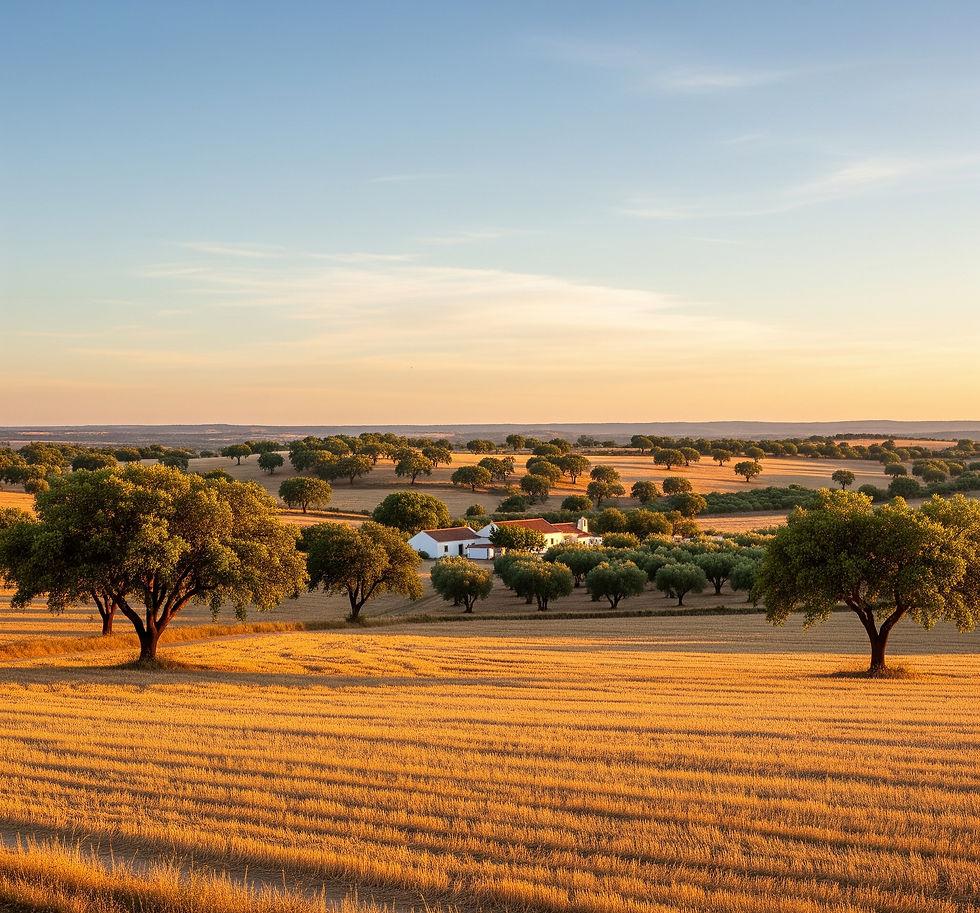
Stretching across a large part of southern Portugal, the region is known for its open plains, cork oak forests, olive groves, medieval towns, and rugged Atlantic coastline.
Here, the landscape feels inseparable from the architecture. Whitewashed houses sit among rolling hills. Old stone walls follow the shape of the land, while historic villages preserve traces of the people who built them.
Yet the Alentejo is more than a beautiful rural escape.
Its cities reveal centuries of history. Its food reflects a close relationship with agriculture. Meanwhile, restored farm buildings and contemporary hospitality projects show how traditional spaces can find new purposes.
For travellers looking for an Alentejo Portugal travel guide that goes beyond the usual attractions, the region offers something especially rewarding: the opportunity to explore with curiosity rather than urgency.
1. The Beauty of a Landscape That Doesn’t Compete for Attention
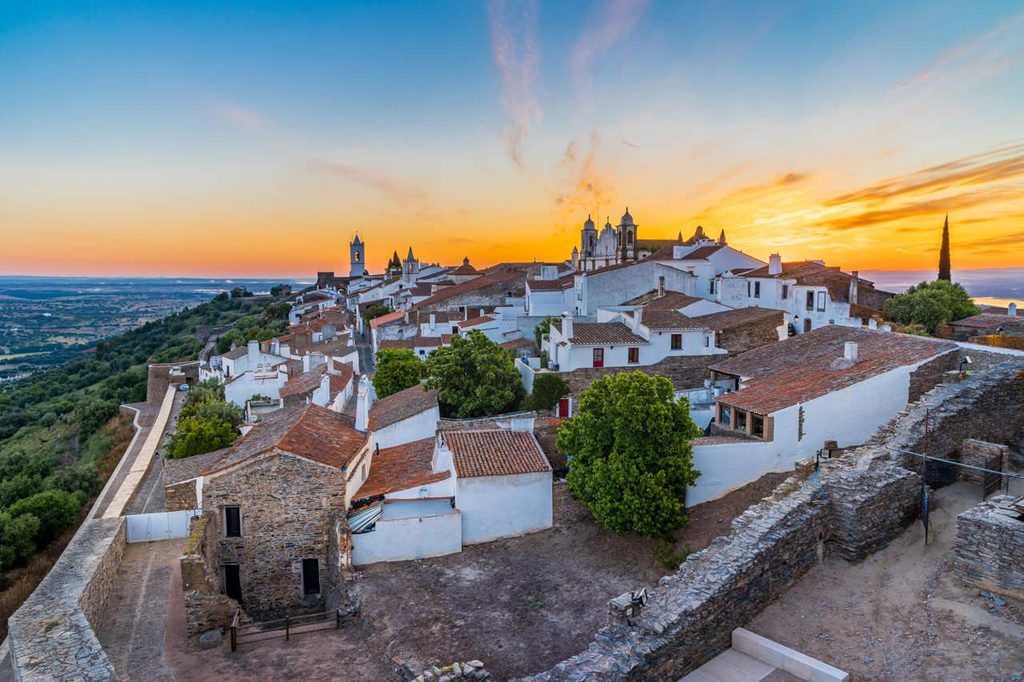
There is a certain simplicity to the Alentejo landscape.
Cork oaks and olive trees punctuate wide plains. Fields stretch towards distant hills, interrupted by small settlements and old farm buildings.
According to Visit Portugal’s official Alentejo guide, these landscapes are among the defining features of the region. However, the Alentejo is not one uniform stretch of countryside. Its inland plains, northern hills, reservoirs, and Atlantic coast each have their own character.
This variety makes the region interesting to explore slowly.
Rather than moving quickly between famous attractions, visitors can choose a smaller area and spend time understanding its surroundings.
An olive grove becomes more than a backdrop. A village’s position on a hill begins to make sense. Even the materials used in traditional buildings reveal something about the land.
For those drawn to nature and architecture, the Alentejo offers a reminder that a beautiful setting does not always need a dramatic centrepiece.
Sometimes, the landscape itself is enough.
2. Monsaraz: A Village Shaped by Centuries
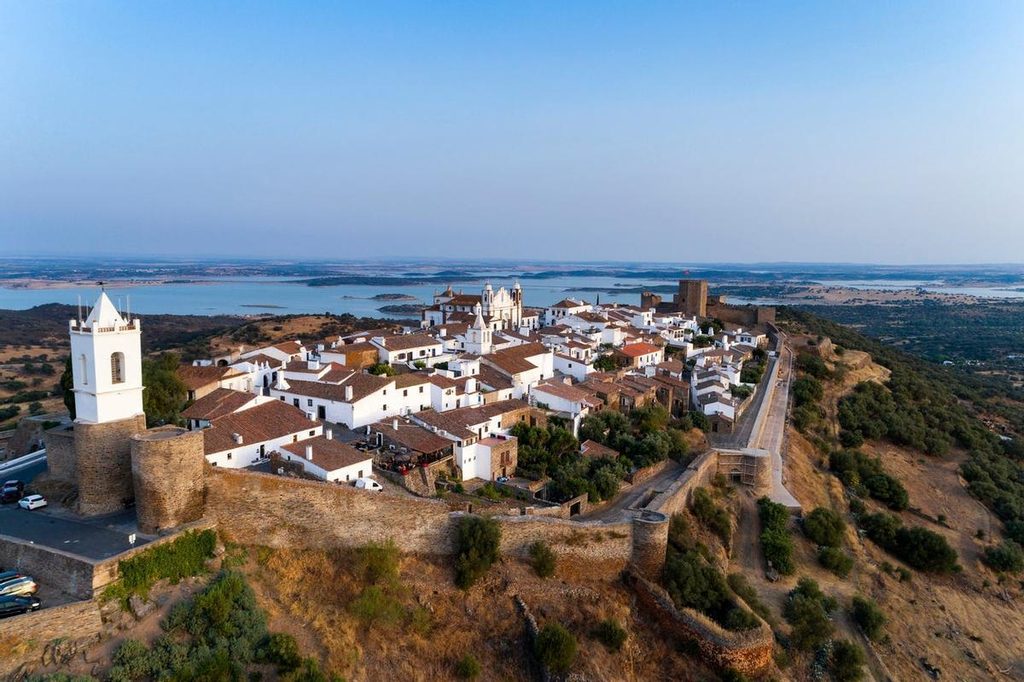
Few places capture the architectural character of the Alentejo quite like Monsaraz.
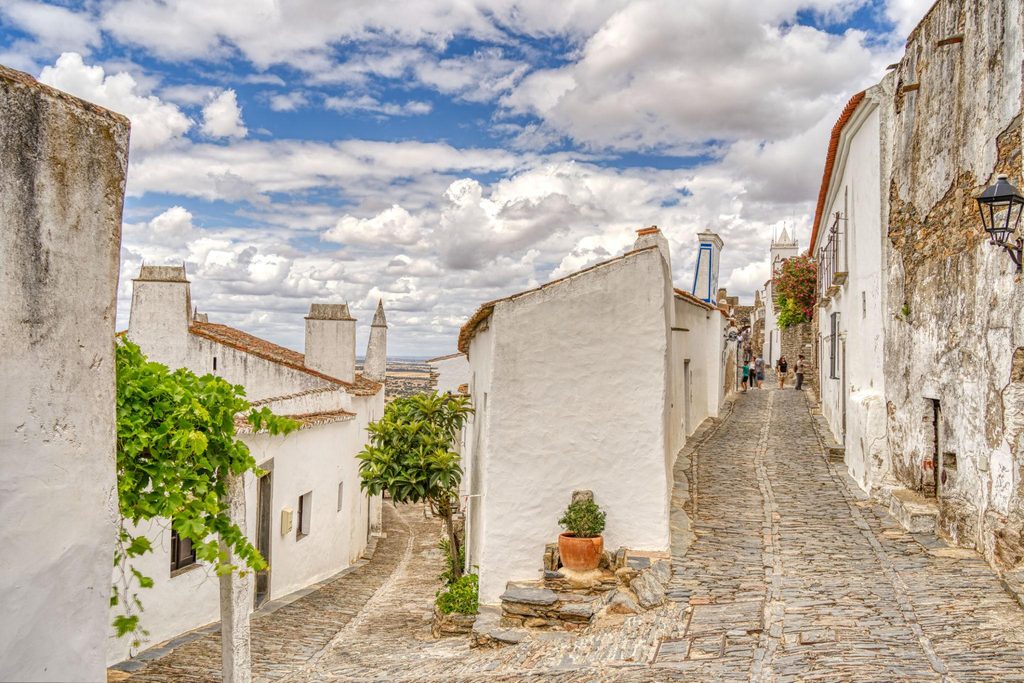
Set on a hill above the surrounding plains, this medieval walled village is known for its whitewashed houses, schist stonework, and historic castle.
Its streets preserve a strong sense of the past, with traditional buildings standing close together inside the old walls.
Among the village’s landmarks are the Church of Nossa Senhora da Lagoa and the former court building, which now houses the Fresco Museum.
From the elevated village, visitors can also look towards Lake Alqueva and the countryside beyond.
The contrast between the compact settlement and the vast landscape is part of what makes Monsaraz so distinctive.
Its architecture reflects a practical response to the setting, while the walls and castle reveal the village’s historical importance.
Instead of treating Monsaraz as a quick stop for photographs, allow time to explore its streets and architectural details.
The NOBL perspective: Monsaraz is a place to appreciate how history, local materials, and landscape come together. Its appeal lies as much in the character of its buildings as in the views beyond them.
Explore the official Visit Portugal guide to Monsaraz.
3. Évora: Where History Lives in the Architecture
The Alentejo’s quiet appeal does not mean it lacks cultural depth.
Évora offers a compelling example.
The city’s historic centre has been a UNESCO World Heritage Site since 1986. Its history stretches back to Roman times, while its streets and buildings reflect centuries of cultural and architectural change.
Among its best-known monuments are the Roman Temple, the cathedral, and the Church of São Francisco.
However, Évora’s importance extends beyond individual landmarks.
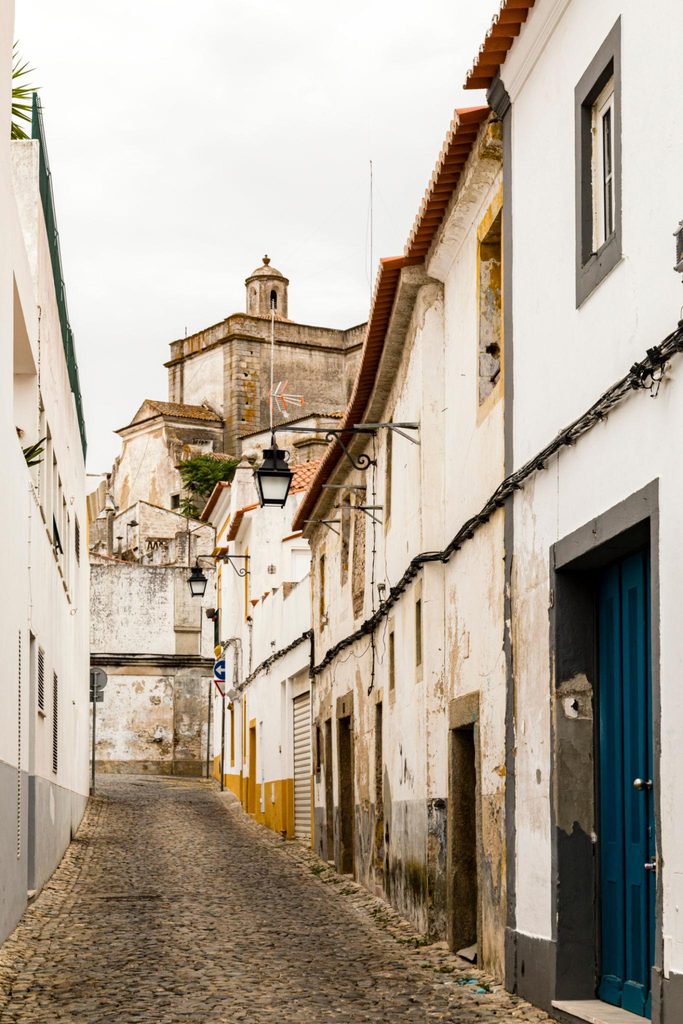
UNESCO highlights the city’s traditional whitewashed houses, tiled façades, wrought-iron balconies, and historic street layout. Together, these elements create an urban landscape shaped over many generations.
This is what makes Évora especially interesting for travellers who appreciate architecture.
The city is not simply a collection of impressive monuments. Its smaller buildings also contribute to a distinctive sense of place.
A narrow street, a traditional doorway, or a modest house can reveal as much about local design as a grand historic structure.
The NOBL perspective: Évora rewards those who look beyond the major monuments. Its everyday architecture tells a broader story about the city’s history and the people who have lived there.
Discover more through UNESCO’s official guide to the Historic Centre of Évora.
4. When Old Farm Buildings Find New Life
One of the most interesting developments in the Alentejo is the way some rural properties have been restored for contemporary use.
Traditional farm buildings are closely connected to the region’s agricultural history. Their forms, materials, and layouts often reflect the practical needs of working estates.
Today, some of these spaces have been adapted into places to stay, while retaining important elements of their original character.
São Lourenço do Barrocal, near Monsaraz, is one example.
The property occupies a historic agricultural estate, where former farm buildings have been restored and adapted for hospitality.
Its architecture reflects a balance between the existing rural setting and contemporary comfort.
Rather than replacing the character of the property, the restoration makes its agricultural history part of the experience.
The project also illustrates a wider question in design: how can old buildings serve modern needs without losing the qualities that make them distinctive?
There is no single answer.
However, thoughtful restoration can create a meaningful relationship between the past and the present.
The NOBL perspective: The most interesting places to stay are not always newly built or perfectly polished. Often, their character comes from the history that remains visible.
Read more about the region and its rural heritage through São Lourenço do Barrocal’s Alentejo guide.
5. Food That Begins with the Land
To understand the Alentejo, it helps to look at what appears on the table.
The region’s traditional cuisine reflects its agricultural landscape and local ingredients.
Bread plays an important role in dishes such as açorda, a traditional preparation associated with bread, garlic, herbs, and broth. Another regional speciality, migas, uses bread as the basis for a hearty dish that can accompany meat or other ingredients.
Olive oil, cheeses, pork dishes, and local wines are also important parts of the region’s food culture.
The Alentejo has a long winemaking tradition, with several recognised wine-producing areas, including Évora, Borba, Redondo, and Reguengos.
For visitors, discovering the region’s food is an opportunity to understand more about its landscape.
A local dish can reveal how ingredients were used in rural households. Meanwhile, a visit to a winery can introduce the relationship between soil, climate, and agricultural traditions.
The pleasure lies not only in tasting something new, but also in understanding where it comes from.
The NOBL perspective: A memorable meal does not always need elaborate presentation. Sometimes, the strongest impression comes from simple ingredients, local traditions, and the pleasure of sharing a table.
Explore the Alentejo Wine Route through Visit Portugal.
6. The Alentejo Coast: A Different Side of Portugal
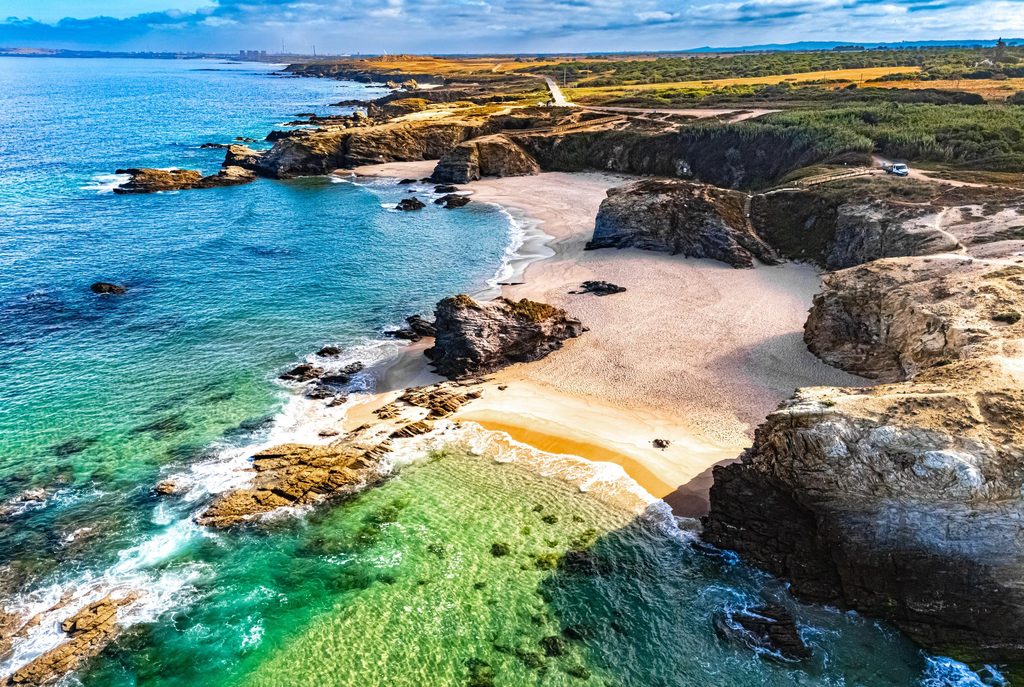
The Alentejo is often imagined as an inland landscape of villages, vineyards, and olive groves.
Yet its Atlantic coastline offers an entirely different experience.
Here, cliffs rise above sandy beaches, while fishing villages and coastal paths connect the landscape to the sea.
Places such as Porto Covo and Vila Nova de Milfontes introduce visitors to this side of the region.
Porto Covo is known for its village centre and nearby beaches. Further south, Vila Nova de Milfontes sits near the mouth of the River Mira, where the river meets the Atlantic.
The coastline is also associated with the Rota Vicentina, a network of walking routes that passes through coastal and rural landscapes.
For those interested in walking, nature, and small coastal settlements, this part of the Alentejo offers a different perspective from the inland villages.
It also shows why the region deserves more than a brief visit.
The NOBL perspective: The contrast between the Alentejo’s interior and coastline is part of its appeal. Exploring both reveals how varied one region can be.
Discover the official Visit Portugal guide to the Alentejo coast.
7. Alqueva: A Landscape Worth Staying Up For
Some of the Alentejo’s most memorable experiences take place after sunset.
The Alqueva area is known for its dark skies and opportunities for stargazing.
Its low levels of light pollution have helped establish the region as a destination for astronomy experiences.
The Dark Sky Alqueva initiative brings together accommodation providers, guides, and tourism activities connected to the night sky.
Visitors can find organised stargazing experiences, while the wider landscape offers opportunities for walking, cycling, and exploring the villages around the reservoir.
Monsaraz is one of the area’s notable historic settlements.
For travellers accustomed to busy cities and brightly lit evenings, the idea of planning an experience around the night sky can feel refreshingly simple.
It is also a reminder that travel does not always need constant activity.
Sometimes, the most meaningful part of a day begins when everything else becomes quiet.
The NOBL perspective: The Alqueva area offers a different way to think about travel experiences. Instead of adding more to the itinerary, it invites visitors to pay attention to something already there.
Learn more about the Dark Sky Alqueva Route.
A Considered Guide to Exploring the Alentejo
The Alentejo covers a large area, so a thoughtful itinerary begins with choosing what interests you most.
For a first visit, these experiences offer a useful introduction.
For architecture and history
Explore Évora’s UNESCO-listed historic centre and the medieval village of Monsaraz. Together, they reveal different sides of the region’s architectural heritage.
For rural landscapes and design
Spend time in the countryside around Monsaraz and discover how traditional farm buildings have been adapted for contemporary hospitality.
For food and wine
Explore the region’s traditional dishes and consider visiting an established winery. The Alentejo Wine Route provides a starting point for researching producers and experiences.
For walking and the coast
Discover Porto Covo, Vila Nova de Milfontes, and suitable sections of the Rota Vicentina. Always check route conditions and access before setting out.
For a quieter evening
Consider an organised stargazing experience around Alqueva. Visibility depends on weather and sky conditions, so check with the provider before booking.
The key is to avoid treating the region as a collection of attractions to complete.
Choose fewer places. Give each one more time.
Frequently Asked Questions About the Alentejo
Where is the Alentejo in Portugal?
The Alentejo is a large region in southern Portugal, extending across inland countryside and part of the Atlantic coast. It is known for its plains, olive groves, cork oak landscapes, historic towns, and rural traditions.
What are the best places to visit in the Alentejo?
Évora and Monsaraz are excellent choices for history and architecture. The Alqueva area offers rural scenery and stargazing experiences, while Porto Covo and Vila Nova de Milfontes provide access to the Atlantic coastline.
Is the Alentejo good for slow travel?
Yes. Its historic villages, countryside, local food traditions, and walking routes make it well suited to travellers who prefer spending more time in fewer places. However, the distances between destinations mean that planning is important.
What is the Alentejo known for?
The Alentejo is known for its whitewashed villages, cork oak forests, olive groves, traditional cuisine, wines, historic architecture, and Atlantic coast. Évora’s historic centre is also recognised as a UNESCO World Heritage Site.
Can you visit the Alentejo without a car?
Some larger towns, including Évora, are accessible by public transport. However, reaching smaller villages, rural properties, and more remote coastal areas may require additional planning. A car can make it easier to explore several parts of the region.
How many days should you spend in the Alentejo?
Three or four days can provide an introduction to one part of the region, such as Évora and Monsaraz. A longer trip is more suitable if you also want to explore the coast or northern Alentejo. The best duration depends on your interests and preferred pace.
The Beauty of Having Less to Do
Perhaps the Alentejo’s greatest appeal is not any single village, building, or landscape.
It is the relationship between them.
The architecture belongs to the land. Food traditions reflect the region’s agricultural history. Old buildings carry stories into the present, while the open countryside encourages a different rhythm of travel.
None of this means the Alentejo exists outside modern life.
Its towns, communities, and landscapes continue to change, just like anywhere else.
Yet for visitors willing to explore slowly, the region offers a valuable reminder.
A beautiful journey does not need to be filled with constant activity.
Sometimes, the most rewarding experiences come from staying a little longer, looking a little closer, and allowing a place to reveal itself.
At NOBL, we believe that where you stay shapes how you feel. Our philosophy of fewer places and more meaning is rooted in the importance of character, atmosphere, and a genuine sense of place.
The Alentejo offers a compelling expression of those same ideas.
Not because it promises an escape from everything, but because it reminds us how much there is to appreciate when we give our surroundings our attention.
The NOBL Journal explores remarkable destinations, thoughtful design, culture, and the art of living well. Discover the NOBL collection of places, selected for their character, setting, and atmosphere.